


 Canada
 Other countries
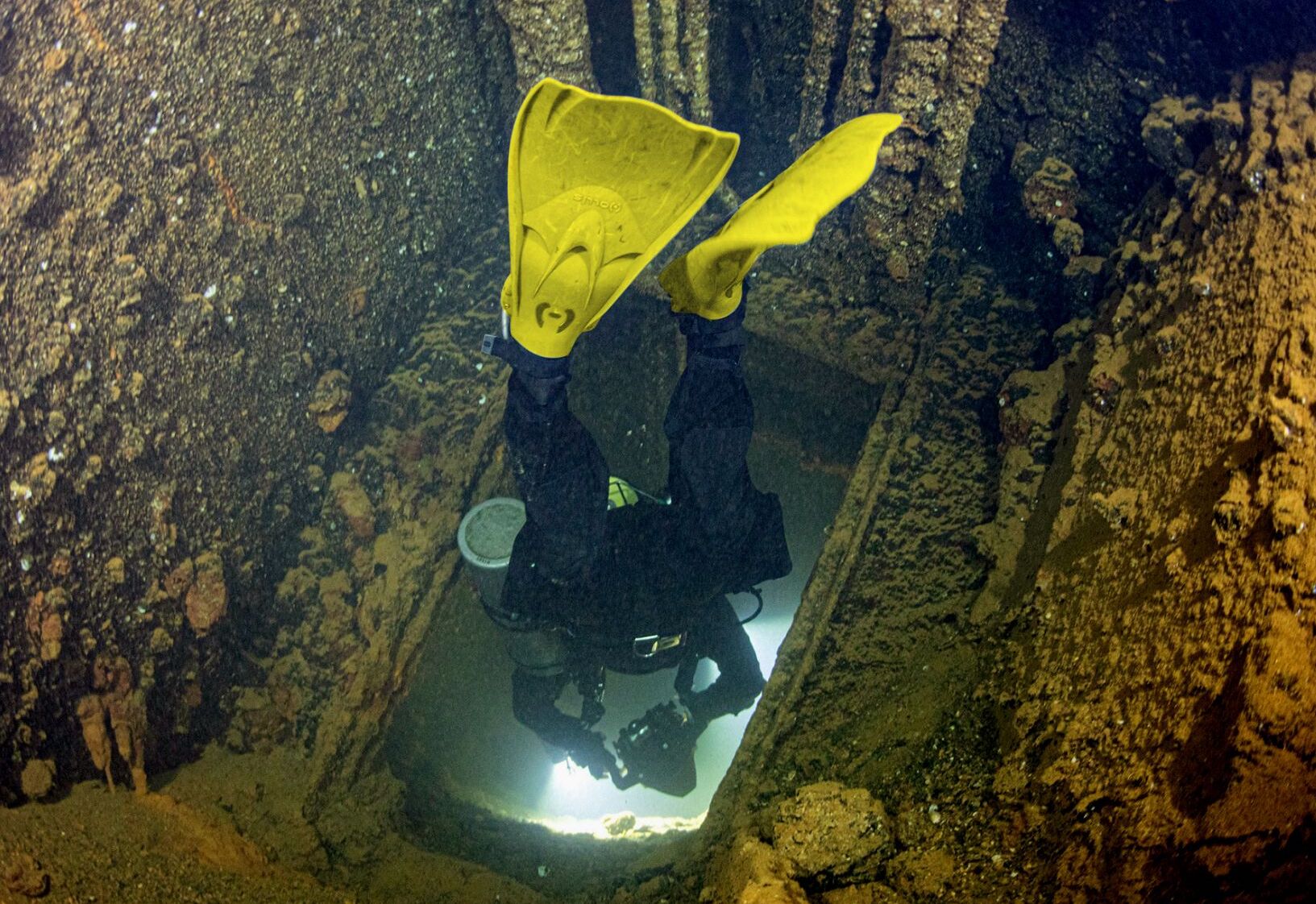

When author and marine explorer Jill Heinerth first decided she wanted to be a commercial diver, she went to a commercial diving workshop and the instructor pulled her aside.
“There’s no room for women in commercial diving,” he told her. “If you want to go off and train dolphins or whatever, go ahead. But commercial diving? No.”
Needless to say, Jill did not ‘go off and train dolphins.’ Instead, she studied and worked toward building a strong level of knowledge and competence. “It’s absurd,” she remembers, “but that’s the way it was.”
Often the only woman on a boat or an expedition, Jill’s been passed over for opportunities based on her gender and even to this day she sees women in technical diving having issues with male colleagues.
“It makes me sad,” she says. “But it’s probably more a reflection on society and of male-dominated endeavors and sports.”
Speaking Truth
Five years ago, Heinerth wrote an article in Diver Magazine titled: Sexism: Alive and well in scuba diving. Since its publication, the piece has ignited conversation and become the most read story in the magazine’s history.
In penning the piece, Heinerth wrote that her “mission was to simply represent the facts and attempt to write an article that validated women’s issues, and also would be informative and enlightening for both sexes.”
Her article, she explains, was not intended to bash men. It was instead about celebrating women and offering a possible template to a more gender inclusive future in our industry.
Unintentional Bias
Another time, a few years ago, Jill was receiving an award at an event. She sat down at a table with a bunch of guys who were mostly military and law-enforcement divers, and as they struck up a conversation with her husband, Jill could barely get a word in.
Unaware of who Heinerth was or the fact that she was literally there to receive an award for diving, the men at the table mansplained diving to Jill Heinerth. And it got awkward.
“They had absolutely no interest in speaking to me,” Heinerth recalls. “They kept talking to my husband, who’s an instructor—he kept trying to bring me in—but they’d have none of it.
“Then I got called up to receive the award,” she laughs. “And that changed the dynamic a little bit.” But Heinerth retains that she doesn’t care if people know what she does so much as she just doesn’t appreciate it when people make assumptions.
One time, she had a cave diving student’s friend offer to “take her diving” and show her the ropes. Again, a person didn’t realize that she was in a position of authority and made assumptions about her skills and qualifications. After bragging about his experience, he made the pitch.
“I’ll give you a tour,” he offered. “You’ll love it!”
She laughed.
“No, no, I’m sure you would!” he doubled down.
Jill’s student eventually let his buddy know that she was his instructor. Once again, it got awkward.
Changes?
Are things changing? “Slowly,” Heinerth says. “There are still some pretty serious issues out there and I hope that every woman knows that there’s no reason why she can’t do anything that any male diver can do.”
Even more recently, Jill had a group of female friends—women she’d mentored as cave diving instructors—receive word that the industry didn’t need any more female cave instructors.
“Why wouldn’t we need more female cave diving instructors? Everything should be objective steps toward success,” she says. “If it’s a class, you achieve mastery, then you move on.”
“I hope that training organizations and instructor schools recognize that, too. Anything is possible—of any gender—as long as there’s support and encouragement.”
