


 Canada
 Other countries
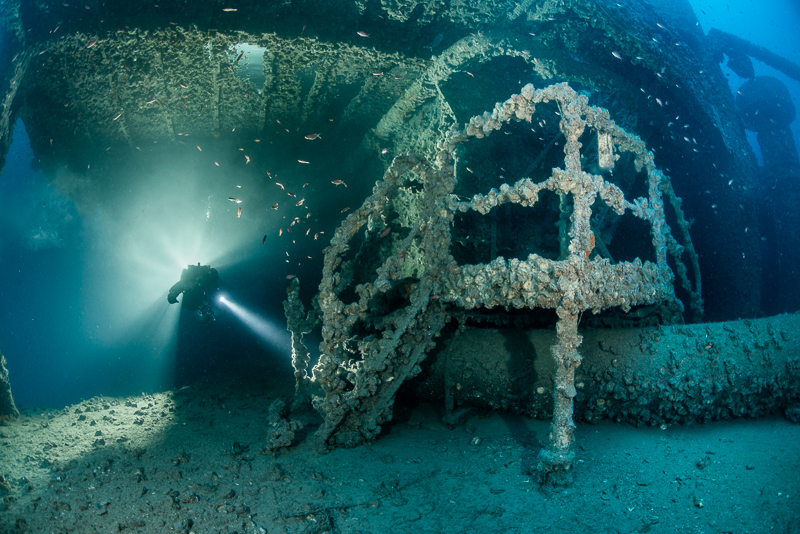
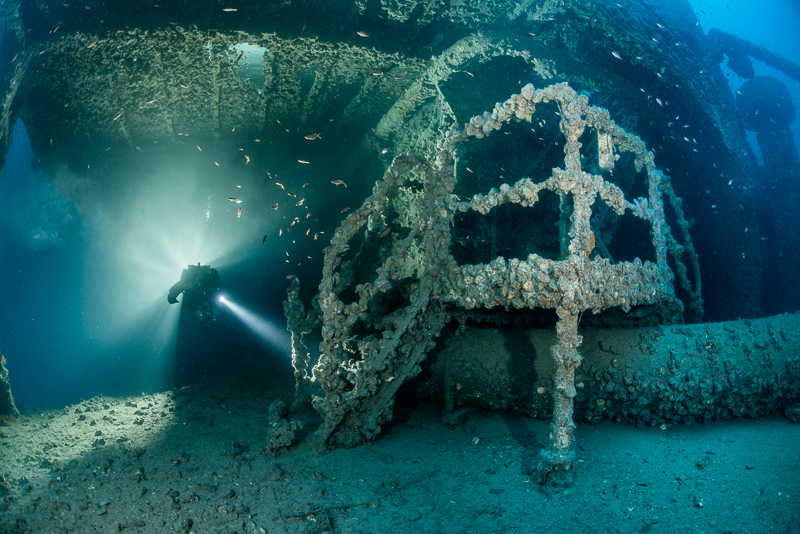
Exploring a wreck is a way to add new flavor and challenge to your diving. Combining elements of danger, adventure, strategic thinking and meticulous planning, wreck diving isn’t for the faint of heart.
And to make things even more interesting, not all wrecks are created equal. The Earth’s oceans, lakes and waterways hold countless aquatic tombstones, relics of other times, cultures and conflicts. With so many options, it can be hard to know where to go and what dives to pursue, so here are a few of the most renowned wreck dives on the planet.
1.) Bikini Atoll, Marshall Islands
A perfect contrast of an idyllic tropical setting with a hyper-violent past conspire to make Bikini Atoll one of the best wreck diving areas in the world. Part of a marine sanctuary that was established in 2011 in the Marshall Islands, Bikini Atoll still struggles with minor levels of radiation that makes continual human habitation untenable. The aquatic life, however, doesn’t seem to mind.
Roughly 70 years ago, following the nuclear bombings at Hiroshima and Nagasaki, the US military set up nuclear tests at Bikini Atoll to further examine nuclear weapons’ destructive potential. Over the ensuing years, dozens of ships were intentionally destroyed and sunk, many in contorted, unnatural shapes left over from the intensity of the blasting. All told, from 1946 to 1958, over 65 nuclear weapons were tested in the area.
Today, wreck divers can see a large number of lost ships that were part of the testing—along with a plethora of shark and pelagic species that call the area home. The unusual conditions mean that divers can find an entire ghost fleet of fully equipped American and Japanese ships, as well as submarines, laying on the seafloor.
2.) Pompano Beach, Florida
Known widely as the Wreck Capital of Florida, Pompano Beach is wreck diver’s dream and offers superlative coastal conditions—all within a quick drive from Fort Lauderdale. To find the majority of the wrecks, look around and adjacent to Hillsboro Inlet.
With dozens of relatively easy-to-access wrecks ranging in depth from 30 feet to 330 feet, Pompano packs a lot in a small area. Other factors, such as abundant coral reefs and high marine biodiversity draw divers the world over to this slice of Florida. Plus, because of a beach-hugging Gulf Stream dynamic that skirts Pompano, the drift diving is some of the best in North America, especially when combined with multiple wreck sites in a single go.
3.) Truk, Micronesia
A true underwater gem of Micronesia, Truk became well known to wreck divers following Jacques Cousteau’s 1971 television program where he profiled the elusive diving zone and its well-preserved wreck sites. Ever since, divers from around the world have flocked to the far-flung treasure trove for its incredibly intact war artifacts.
The marine graveyard—located more broadly in the Caroline Islands—is a relic of a battle waged between allied planes and a Japanese naval fleet during World War II. More than half a century later, the marine environment has completely overtaken the underwater graveyard. Over 100 sunken planes, ships and submarines dot the shallow reef—many still holding cultural relics from the crafts’ crews as well as extensive military hardwear. Many outfitters and dive shops offer trips to the sites, but be sure to leave the area as you find it—treasure and souvenir hunting is strictly prohibited.
4.) Scapa Flow, Scotland
Yet another byproduct of war and conflict, Scotland’s Scapa Flow differs from many other popular wreck diving destinations because its wrecks come from centuries of conflict—not one specific battle.
A main draw is the diversity of diving in the Orkney waters, with some wrecks offering relatively shallow access while others are strictly the realm of tech divers with extensive experience. The area is a good place to start your wreck diving career, but it’s also a great place to push yourself and your skills toward further mastery.
Plus, Scapa Flow is as big a draw for history buffs as it is for divers. Each wreck tells a story, many with sad, brutal endings that included great loss of life. Both the HMS Royal Oak and HMS Vanguard are regarded as war graves and divers are not permitted access, however, many other ships are accessible to divers, including seven wrecks from the German High Seas Fleet, which was scuttled in 1919 as a condition of the armistice following World War I.
5.) SS Thistlegorm—Ras Muhammed, Egypt
Another casualty of World War II, the SS Thistlegorm was a British merchant navy vessel that was sunk by German aerial assault in October of 1941. Its final resting place is near Ras Muhammad in the Red Sea and has become a world-renowned wreck diving destination due to its well-preserved cargo that includes motorcycles, trucks, jeeps, tanks, heavy artillery and anti-aircraft guns.
Residing at a depth of about 100 feet, the ship’s central superstructure was blown apart during the attack, leaving the vessel’s inner sanctum largely accessible and exposed for divers to explore. Aquatic sea life is plentiful in and around the 420-foot wreck and it’s possible to access the location for diving via liveaboard as well as book a day trip through the popular Egypt dive enclave of Sharm El-Sheikh.
