


 Canada
 Other countries
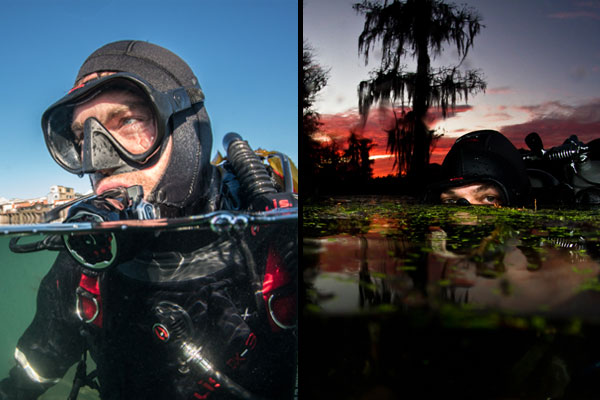
Tech diving… sounds intimidating to some, but what is the difference between technical and recreational diving? Simply put, it’s a matter of a few feet or minutes; diving beyond the 130ft (40 meters) recreational limits or longer than no-decompression limits. A tech diver crosses that imaginary line, whether it is depth or time, between the ability to make a direct ascent to the surface and being required to make decompression stops.
Seems like no big deal, but once you decide to cross that line into technical diving, it opens the door to an extensive list of training requirements you need to meet.
Keep reading for more details.
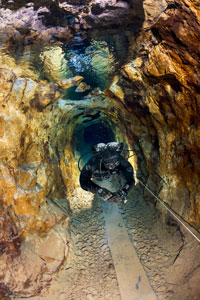
What You Learn: Tech Training
Every technical diver starts out like every other diver, with the basics. Once they master those, they continue their training into:
- Understanding decompression
- How and why to switch to different gas mixes
- How to handle problems at depth
- Managing the extra equipment
- Practising advanced dive skills
The path of a recreational diver may lead to becoming a rescue diver, while a technical diver may head towards becoming a Trimix diver or a Rebreather diver.
What You Need: Equipment
Tech divers and recreational divers carry the same gear, but tech divers carry more of it. Because you cannot make a quick ascent, you need to have the equipment required to solve problems at depth. This includes having:
- Multiple cylinders of gas, regulators and dive computers
- Cutting tools
- SMBs
- And multiple masks for backup
Redundancy is the name of the game when it comes to technical diving.
Backmount and sidemount divers use similar equipment, but it is usually configured differently. More details below.
Backmount BCDs: What Are They?
Backmount BCDs are what most divers picture. There is a mount for the tank directly on the diver’s back, and a bladder in either a donut or wing shape.
Technical BCDs allow for extra space in the back to:
- Accommodate twin tanks
- Allow for more lift,
- Offer multiple attachment points for storing tools
- Stage bottles and more
BCDs for technical diving are often more modular, so a diver can customize their set-up to meet their needs and ensure a perfect fit.
Sidemount BCDs: What Are They?
Sidemount BCDs offer:
- Attachment points
- Bungees
- Clips
- CAM bands and more to secure the tanks to the side of the diver
The bladder is also shaped differently to promote proper horizontal trim. Sidemount BCDs accessory attachment points are configured not to conflict with the side-mounted tanks.
Tech Regulators
Regulators for tech and recreational diving have similar designs with a few differences.
- Tech divers need more regulators. Because technical divers require more gas, they carry more tanks. A regulator is needed for each one of them. It is not uncommon for a technical diver to have 3 or more complete regulator sets.
- Configuration differences. With all those regulators comes a lot of extra hoses. Hoses need to be routed to remain organized. Hoses of different lengths and attached to various ports in the first stages are used to achieve this.
- Oxygen Regulators. Technical divers use different gas mixes; Gases with higher O2 concentrations are most often used. However, O2 can react with certain elements, so, O2-compatible regulators are needed. These regulators are usually designated with green for easy recognition on land at depth.
Tech Diving Accessories
- Reels: Reels are used in both tech and rec. The difference is the size of the reel. Reels are used in caves, wrecks and drift decompressions, which require more line than on recreational dives. In the name of redundancy, tech divers carry multiple reels and finger spools.
- Lights: Caves, wrecks and deep water offer little light, so technical divers bring their own… and a lot of it. Canister lights last the longest, but hand-held lights are quick, secure back-ups. The goodman handle is a common sight for tech divers. Hard or soft, the goodman handle straps the light to the top of the hand, making it hands-free.
- Fins: With all that gear a tech diver is hauling around underwater, they need fins that will move a lot of water, are comfortable, allow for alternative kicks, and are easy to don and doff even with thick gloves.
Tech divers need their gear to be durable and reliable. That is why you’ll often see simple designs.
Analog gauges won’t run out of batteries in 200ft of water. Fins with spring straps won’t snap a buckle while in a cave. Since tech divers can’t end the dive and go directly to the surface, they need their gear to be simple and dependable.
Now, that doesn’t mean tech divers don’t appreciate shiny gadgets and aren’t interested in new technology, but often it’s used alongside the other gear. Again, redundancy is the name of the game.
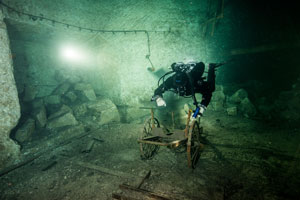
Is Technical Diving Safe?
Our understanding of diving and decompression has grown substantially over the years. With the proper training and equipment, technical diving can safely take divers to places they cannot go as a recreational diver.
Who Should Try Technical Diving?
Not all technical divers are adrenaline junkies. Most are curious and see what is beyond recreational limits. Others are advanced divers who want to explore more and stay longer. They are divers, possibly you, who want to go from rec into tech diving.
Are You Ready?
Get started with Hollis — the trusted, leading global provider of all technical diving equipment.
