


 Canada
 Other countries
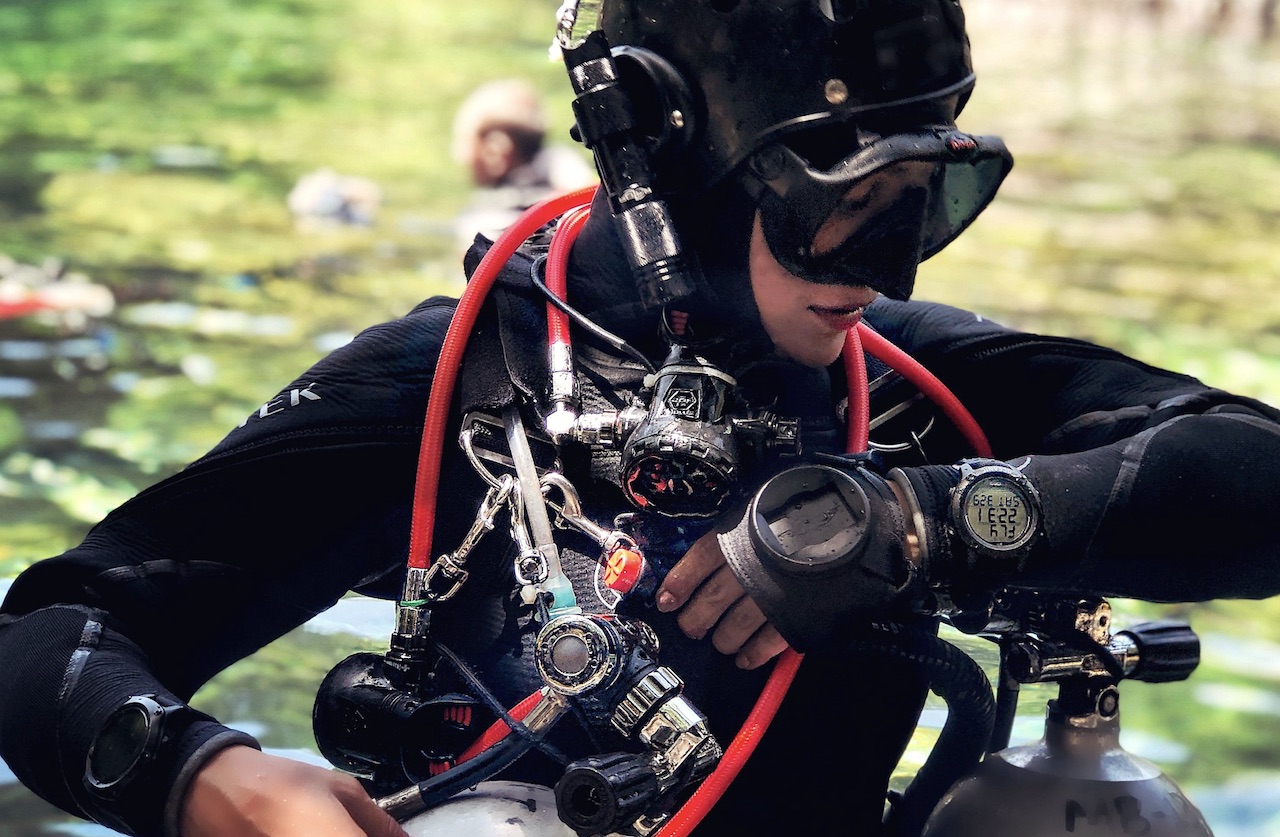
Author and elite tech diver Jill Heinerth reflects on how she moved from rec to tech diving.
Want to go tech? Eventually, most divers wonder:
- If they’re up to the challenge
- And how to make the transition from recreational to technical diving
If you’re reading this, this blog is for you.
Why Divers Get Into Technical Diving
For every diver, there comes a day when you want to go a little bit deeper or further, or stay down just a few minutes longer.
Most Open Water courses train at a maximum depth of 60 feet and almost always err on the side of caution, which, for beginners, is a great thing. But tech diving, at its core, is all about going further, deeper and longer.
Recreational diving is how most people enter the world of scuba. Whether you get certified randomly during an international vacation or take a well-planned course at your neighbourhood pool, the allure of exploring the underwater world converts many of us into lifelong divers.
The Thirst for More
Once you’ve passed through your Open Water beginner and advanced courses, you have the choice to pursue what type of diving you want to practice. Recreational divers tend to emphasize follow-up education in wreck diving and fish identification, while the tech route entails advanced courses in trimix, sidemount and rebreather diving.
The Science Behind Tech Diving: Does It Scare You?
If you’re on the fence about making the transition from rec to tech diving, ask yourself: How committed are you to the prep phase?
Rec divers have the luxury of being able to lean heavily on purpose-built dive computers that take much of the mental gymnastics out of dive prep. But tech diving puts the onus of preparation squarely on your shoulders.
If all you want to do is set your computer and have it feed you instructions pertaining to dive time and decompression, then perhaps a lifetime of rec diving is perfectly appropriate. On the flipside, if prepping mechanical systems and dialing in your own gas mixes doesn’t sound intimidating—and you rejoice in the physics of it all—then you might have the heart (and mind) of a tech diver.
For those of you who are ready to make the switch from recreational to technical diving, here are a few expert tips from Jill Heinerth.
Who Is Jill Heinerth?
Jill Heinerth is an internationally recognized cave explorer, author, and educator. She has spent decades training divers and leading expeditions around the world.
Her Advice for Getting Into Tech Diving
Tip #1) Find the Right Teacher
Jill Heinerth has spent her career training people to tech dive. Despite pioneering and mapping some of the most remote and hard-to-reach places on the planet, Heinerth is intimately in touch with the struggles of her students and can easily recall her time learning how to go on technical dives.
In a nutshell, she urges “folks to take it slow and just take training in small bites with time for experience in between.”
So start slow and find a supportive teacher (or two) that you both trust and respect.
Tip #2) Invest in Your Tech Future
“When it comes time to buy equipment,” says Heinerth, “I think divers should ‘look ahead’ and consider the type of diving you might want to do in a few years. You can ‘buy it for life’ if you make good choices. High-performance regulators are worth the investment. If you service them annually, they will last a lifetime.”
Tip #3) Refine and Tweak Your Gear
Heinerth is a big believer in owning your own gear so you can tweak, refine and modify your kit to your desired specifications. Every diver is a little different, so she insists that it’s nearly impossible to develop a kit if you’re using a rental/borrowed rig during the entirety of your training.
“At the technical level,” she says, “it is important to invest in all your own gear [perhaps with the exception of tanks if your living situation makes that tough]. You should own everything else. When you take tech classes, a lot of time is spent refining the details of your gear for good trim. You cannot achieve the highest levels of refinement if you are borrowing or renting someone else’s equipment. Once your tech kit is well fitted, then you will have a much easier time with all the skills and drills.”
The moral of the story? Never compromise on your personal comfort and safety.
What’s Next?
For more dive interviews, industry news and gear updates, read the Hollis Blog.
